Mr. Konstantinus Aman’s High Hopes for an Equitable Education Approach in East Nusa Tenggara

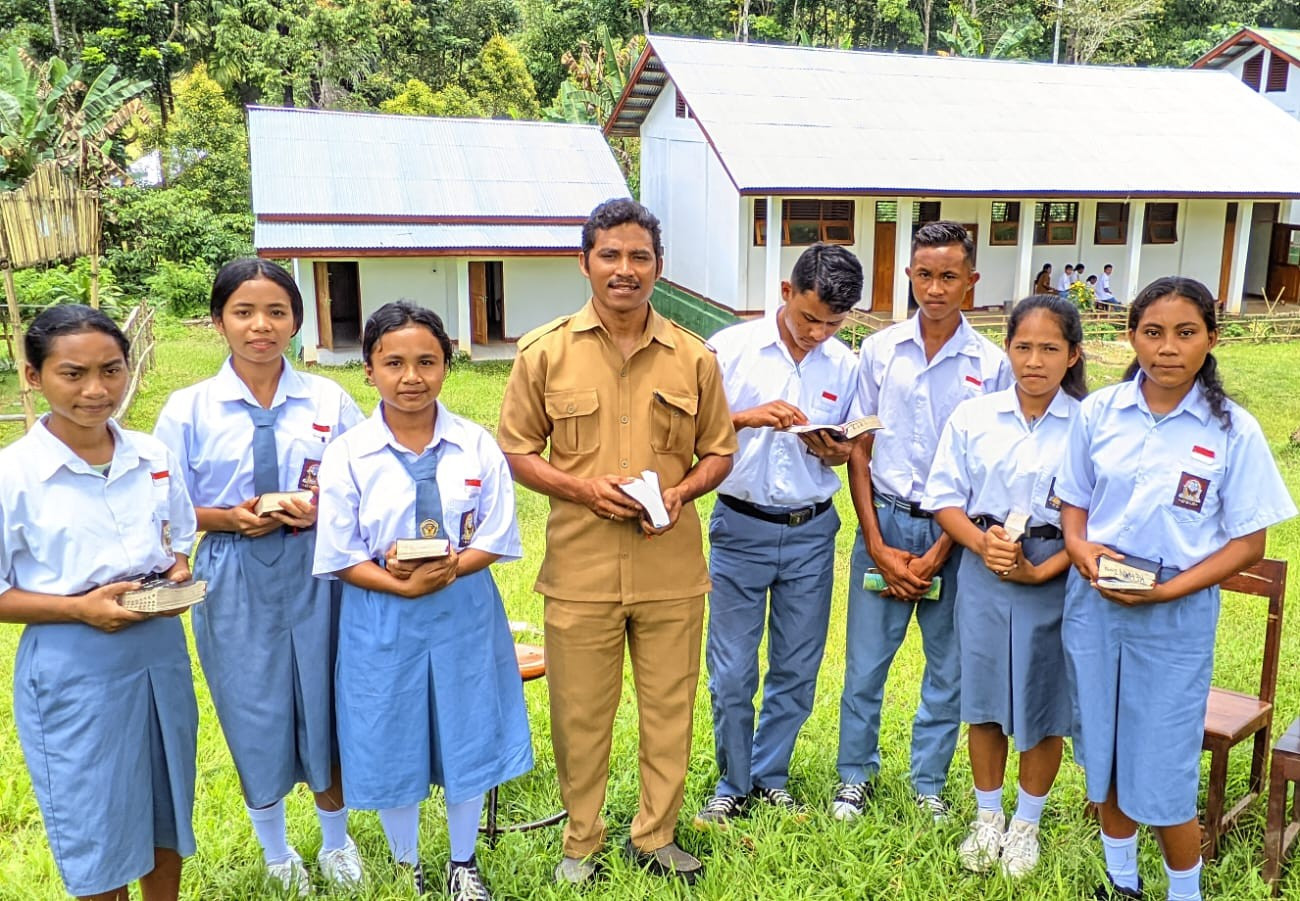
In a region of West Manggarai Regency, Flores Island, East Nusa Tenggara, an educator named Konstantinus Aman goes about his daily life as a Catholic Religious Education teacher at Macang Pacar State High School No. 3.
For him, school must be a safe and comfortable place for every student without exception. This is what led him to participate in a webinar on a safe and comfortable school culture organized by PeaceGen Academy and PeaceGeneration Indonesia.
“For me, this is an opportunity to share a little about what our school is like in this remote area,” he said.
Challenges on the Grassroot
Mr. Aman was once appointed to the TPPK Task Force, and that experience brought him into closer contact with various issues in the educational environment, including bullying.
In his view, educational issues in his region cannot be separated from the social and cultural background of the surrounding community. Most students come from environments with similar lifestyles and parenting styles. Many parents work in the fields from morning until evening. In certain situations, the responsibility for their children’s education falls entirely on the school.
“This situation isn’t simply because parents don’t care, but because their circumstances force them to focus on their daily work,” he said.
Mr. Aman’s Passion for Implementing a Safe and Comfortable School Culture
Mr. Aman’s statement serves as an important reminder that changing school culture cannot be achieved through a rigid approach. There are social and cultural contexts, as well as long-standing customs, that must be collectively understood.
For him, character education is not merely a theory in the curriculum, but a long process that gradually shapes children’s awareness of who they are and what they want to become in the future.
That is why the webinar from PeaceGen Academy and PeaceGeneration Indonesia that he attended felt so meaningful. Mr. Aman discovered a new perspective on how to build a safe and comfortable school culture without losing sight of the realities of schools in his region.
“I tried to find out more about PeaceGeneration, and it turns out they’ve been working on character education, an issue that’s inseparable from the world of education,” said Mr. Aman.
According to him, schools have often focused too much on academic aspects and curriculum requirements. Meanwhile, character development and human values have gradually been overlooked.
“Sometimes we focus too much on the pedagogical aspects, so we tend to forget about building character,” he said.
Enthusiasm for the Presentation Material
During the webinar, Mr. Aman felt he gained a lot of new insights. It wasn’t just the material, but also inspiration and opportunities for collaboration. He said he was happy to hear firsthand about the experiences of other schools that have implemented best practices in creating a safe and comfortable learning environment.
Baca juga: A Homogeneous School Environment Didn’t Stop Pak Agus from Creating an Inclusive School
“The best practices from those schools served as a source of motivation for me. Why don’t we try doing the same?” said Mr. Aman.
For him, one of the strengths of the webinar was the way the material was presented, simple and grounded in the realities of school life.
Mr. Aman also appreciated the approach used by the presenters because it wasn’t overly theoretical. As a teacher in the field, he felt that a practical approach was far more helpful than abstract concepts that are difficult to apply.
“If there’s too much theory, it can get overwhelming. But when it’s practical like this, it’s much easier to understand,” said Mr. Aman enthusiastically.
His enthusiasm for implementing the webinar’s content is truly high. Mr. Aman requested the presentation materials from the organizers to review them again. He feels that training like this shouldn’t stop after just one session. In his view, teachers in rural areas need ongoing learning opportunities, especially regarding character education and a safe school culture.
“We can’t just let it go once the webinar is over,” he said.
Hopes for Sustainability
Mr. Aman’s greatest hope is a noble one: he hopes that schools in rural areas can gradually adopt an equitable educational approach without losing their own cultural roots.
He realizes that change won’t happen overnight. But he believes every small step still matters. The spirit of teachers like Mr. Aman serves as a reminder that education isn’t just about academic grades, but about building character. So that children feel safe at school and the classroom can become a place where empathy grows.
At the end of the interview, when asked to name one phrase that best describes the webinar, Mr. Aman replied briefly:
“A safe and comfortable school culture.”
Behind that answer lies Mr. Aman’s deep hope that every child, no matter where they are, deserves to grow up in a better educational environment.
Want to collaborate in creating safe and comfortable schools? Contact us at [email protected]